

Launch day is the smallest part
Write down everything that has to happen each week once the course is selling. Someone answers student emails. Someone checks unfinished checkouts. Someone updates landing pages when a price or a date changes. Someone sends the newsletter.
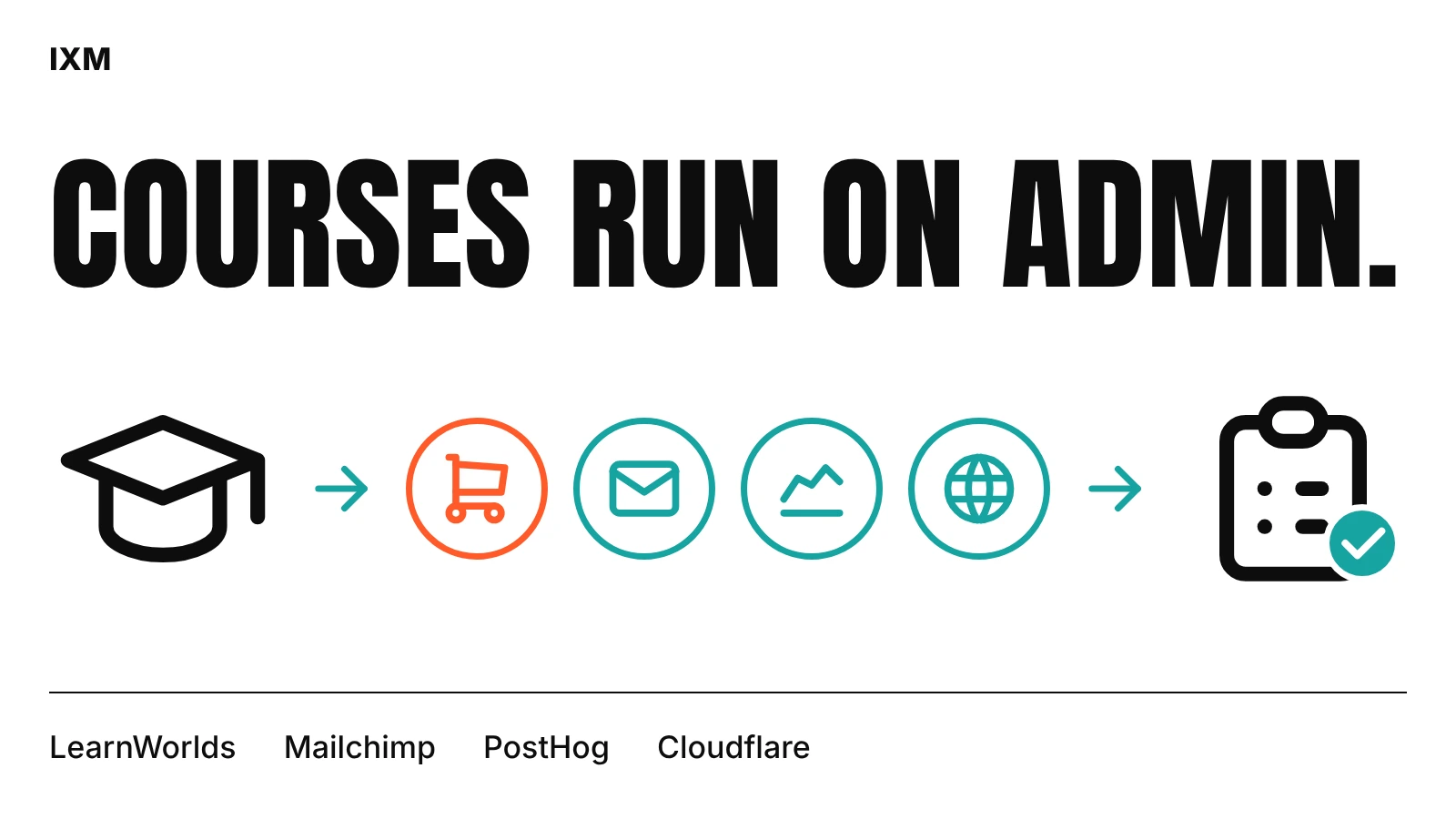
Some of that should be automated, and some needs a person. IXM set up Mailchimp cart-abandonment emails, newsletters and follow-up automations for Boom Marketing's LearnWorlds courses, which removed repeat work without removing the people students need to reach.
Decide which number you trust
Your course platform, your analytics and your ad pixel will rarely report the same sales total. They measure different things, at different moments, with different blind spots. That is normal, but you need to decide which system answers which question.
Use the platform's orders for revenue, analytics for how people moved through the site, and the ad pixel for judging campaigns. On Gold Method's real estate courses, IXM connected PostHog sales tracking, Google Analytics and Meta Pixel to the landing pages and free guide funnels, so each number had a clear job.
Write down the boring parts
Domains, DNS, Cloudflare settings, email sending records and platform logins tend to live in one person's head. That works until a renewal lapses or emails start landing in spam.
Keep a short list of every account, who owns it, when it renews and who to contact if something breaks. Check it once a month. A course business in Trinidad and Tobago selling to overseas students can't afford to have its checkout go down overnight.
Quick audit
- Every recurring task has a named owner.
- Unfinished checkouts get a follow-up.
- You know which system reports revenue.
- Domain, DNS and platform renewals are written down.
Sources used