

Ask a stranger, not your designer
Hand your phone to someone unfamiliar with your business. Ask what you sell, who it is for, and where you operate. Let them answer without helping.
If they have to guess, rewrite the introduction. 'We deliver innovative solutions' tells them much less than a plain description of the work you do.
Give the visitor something to check
Show relevant projects with enough context to understand your contribution. Keep contact details current. Use testimonials only when they are real and you have permission to publish them.
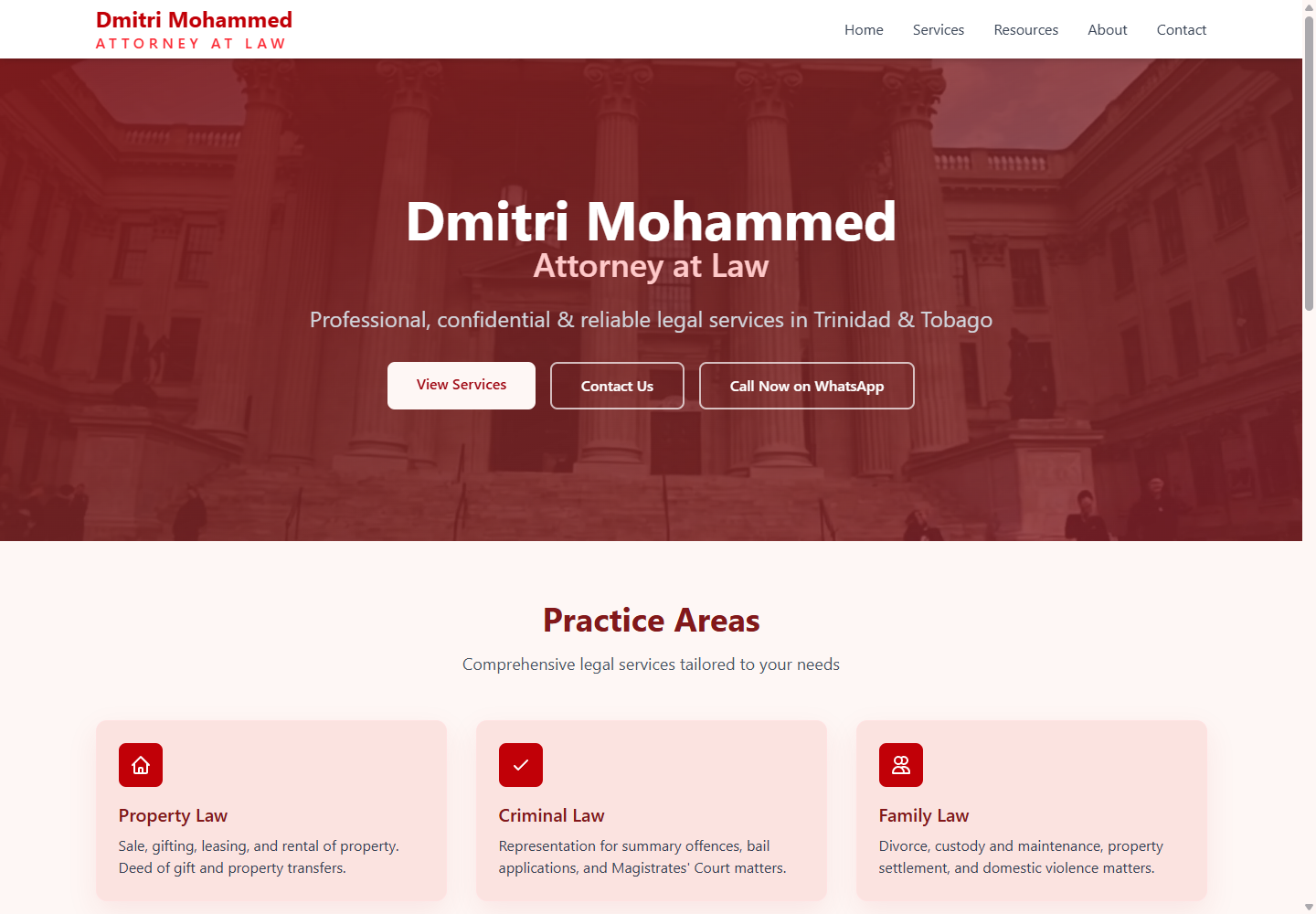
For a Trinidad and Tobago service business, make your service area clear. A beautiful page is frustrating when the visitor cannot tell whether you serve their location. IXM's law-firm website in the cover is one example of a local professional-services project.
Read it on your phone
Can you read the service details without zooming? Does the menu work? Are important details hidden behind popups? A visitor should be able to check you out while waiting in a queue.
Write down the three things that made the business hardest to understand. Fix those first. A full redesign might be unnecessary.
Quick audit
- Are the services and service area obvious?
- Are project examples and testimonials genuine?
- Are contact details current?
- Can a new visitor read and navigate the site on mobile?
Sources used