

Map meaning before field names
Two labels can look alike while describing different information. Start by recording what each answer means, where it belongs and which record owns it. Include the expected type, allowed values and the rule for an empty answer. Do not assume that a matching label is enough.
A practical mapping sheet includes source question, destination product, record type, destination field, transformation, missing-value behavior and reviewer. Use a few representative answers to test the interpretation. This can expose a mismatch before it becomes a confusing change in the live record.
Distinguish the field from its stored value
A field definition describes the place information can be stored; an existing value belongs to a particular record. The update path needs to know whether it is changing that value or creating a missing one. Treating those as the same operation can produce duplicate or incomplete data.
The documented Goldfarb & Luu workflow updates an existing mapped matter-value record and only prepares a missing value row when the field definition can be resolved. That is an implementation decision from the project, not an assertion that every field in every Clio product behaves identically.
A contact selection is a relationship
An internal contact identifier is not a person’s name or address. If a form answer represents a linked person, the workflow should resolve the appropriate contact and matter relationship rather than copying an identifier into a display field.
The documented intake workspace searches before creating contacts and keeps the linked-contact role in the mapping. Matching rules still need review, especially where people share a name or a returned form contains a changed detail. A confident-looking match should not hide ambiguity from the staff member responsible for the record.
Show the proposal before applying it
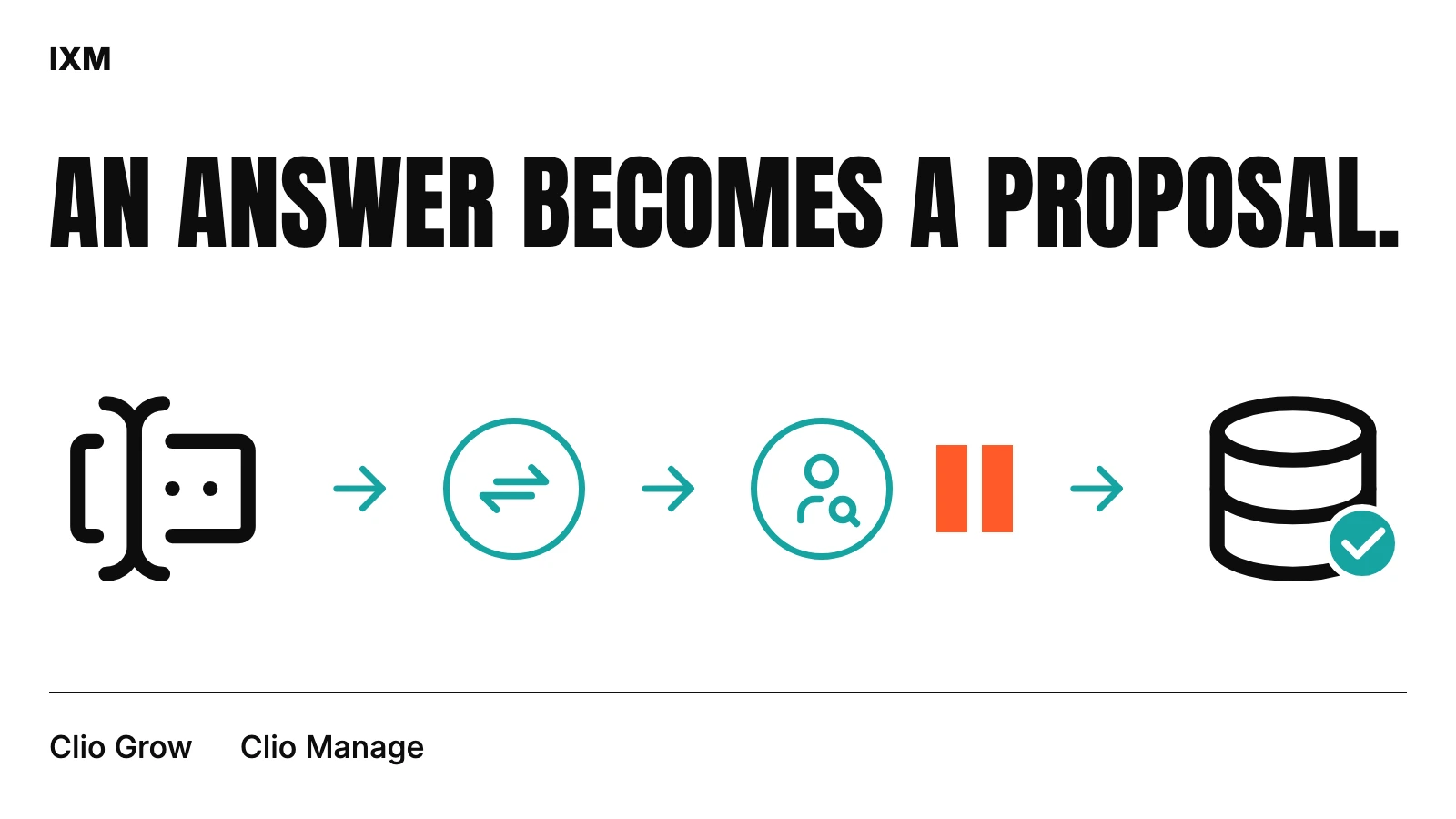
A review view should distinguish updates, possible creates and skipped items. For an update, staff need enough source context to understand the proposed change. A skipped field should explain what is missing or unsupported so the team can correct the mapping or handle the item manually.
Preparation and confirmation should be separate actions. Generating a preview does not need to modify a client record. If the source changes between those steps, the implementation needs an agreed way to re-check it; a preview is a view of a moment in time, not permanent authority to overwrite later changes.
Test awkward records, not just complete forms
Include an unanswered optional field, a missing required answer, an existing contact, a possible duplicate, a missing destination mapping and a repeated submission. Agree the expected behavior with staff before comparing the software result. The point is to test the mapping decision, not simply whether a request returns success.
The project documentation records controlled matter-field checks while identifying further validation for some native contact-profile writes. That is why the case study describes supported, reviewed updates rather than universal synchronization. A new scope should identify the fields that are ready and those that require additional validation.
Leave a useful record for the team
Staff should be able to see which request was submitted, which changes were reviewed and what the confirmed action produced. A technical log may help a developer, but the operating team needs a readable status and a clear next step when something remains unresolved.
IXM’s intake workspace keeps request and communication metadata alongside the matter workflow. Its public case study focuses on forms, review, homework and controlled Clio updates. The goal for a new integration is equally practical: preserve the meaning of the answer, show the proposed change and leave enough context for a person to understand the outcome.
Quick audit
- What does the answer mean and where does it belong?
- Does the destination value already exist?
- Is this plain text or a linked contact?
- What happens to missing and unsupported mappings?
- Can staff inspect creates, updates and skips?
- Are repeated submissions and uncertain matches covered?
Sources used