

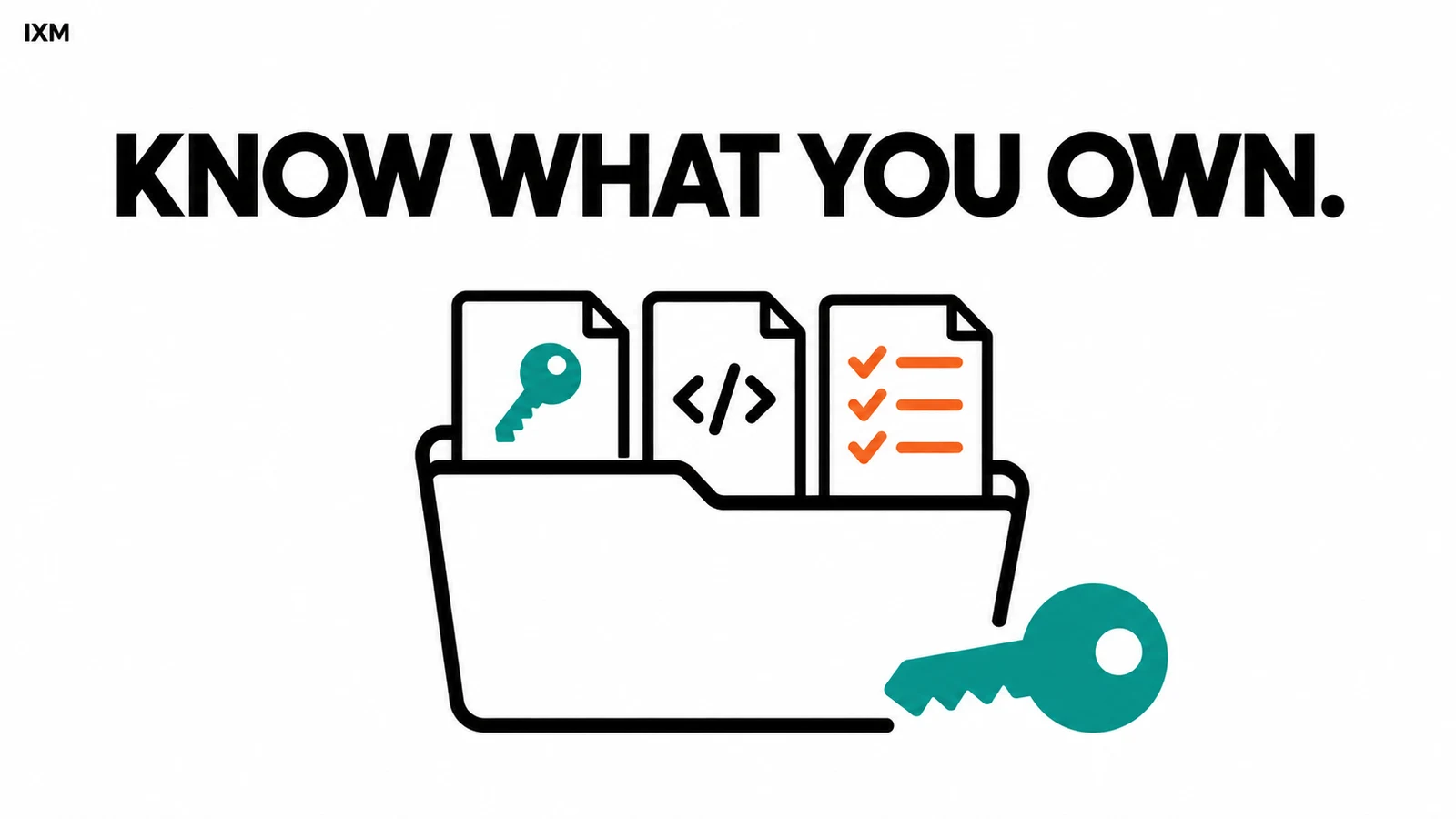
Ask what your business will control
Before the project starts, agree on account ownership, access, source files, third-party licences and recurring subscriptions. Put the answers in the scope so both sides know what delivery includes.
For a website, check the domain, hosting and content access. For an application or automation, include the code repository, connected accounts and deployment instructions where they are part of the agreement.
Documentation has to survive a real question
Who checks a failed run? How do you pause the workflow? Where does the data come from? A handover should answer those questions without requiring the original developer to join every call.
On an operations project for a US home-services company, IXM delivered documentation alongside CRM modules, integrations and dashboards. The written process is part of helping another person understand the system.
Try one ordinary task before sign-off
Ask the person who will manage the system to make an agreed update using their own account and the supplied instructions. If they get stuck, you have found a gap while the project is still open.
For businesses hiring a website or software developer in Trinidad and Tobago, this is a useful acceptance check. Confirm support arrangements too: what is covered, who to contact, and what becomes a separate job.
Quick audit
- Does your business control the agreed accounts?
- Are source files and licence terms accounted for?
- Can someone pause or recover the workflow?
- Are recurring costs and support responsibilities clear?
Sources used